Start with a list
- Write down every job, big and small, and which room it's in.
- Mark anything that needs a ladder, a lot of strength or a licence.
- Put the safety jobs first: a loose rail, a flickering light, a leaking tap.
- Keep the list somewhere handy, so it's easy to add to.
Which jobs need a licence
Electrical and plumbing work is regulated in every state and territory, and it's generally done by a licensed tradesperson. That's for safety: faulty wiring and plumbing can cause shocks, fires and water damage. If you're unsure, your state's licensing body can tell you what applies.
Hanging, fixing, assembling
Pictures, curtain rods, loose handles and flat-pack furniture. A handyman can usually take care of these.
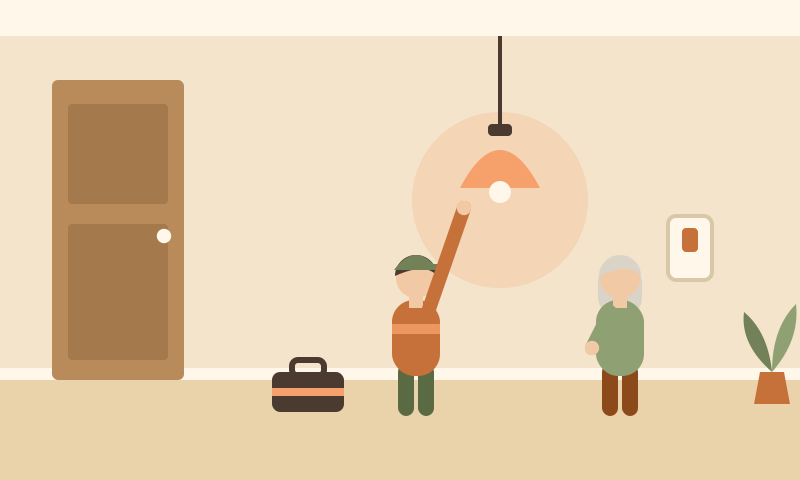
Power points, switches and lights
Anything to do with wiring is a job for a licensed electrician.
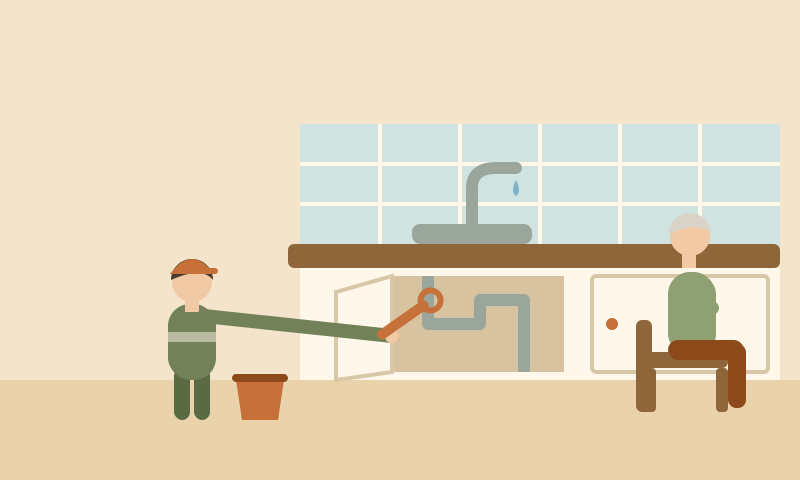
Taps, toilets, pipes and drains
Leaks, blockages and fittings are jobs for a licensed plumber.
Before anyone starts
- Ask who is coming and when, and tell a neighbour or a family member.
- If the job needs a licence, ask to see it.
- Agree what the job involves, and what it will cost, before work begins.
- Be wary of anyone who turns up unannounced offering to do work.
- Have someone with your parent if they'd like the company.
When the job's done
Ask them to show you what they did and to explain it in plain language. Check it works while they're still there, and keep any paperwork or certificates they give you.